
Defamation is the legal term for any false and unprivileged statement communicated to others that damages a person’s or business’s reputation. It is a civil wrong (tort) designed to hold individuals or organizations accountable for spreading lies that cause quantifiable harm, such as financial loss or emotional distress.
The Two Types of Defamation
Depending on how the false statement is made, defamation is categorized into two main forms:
Libel: Defamation in a published, written, or relatively permanent format (e.g., newspaper articles, websites, social media posts, or videos).
Slander: Defamation communicated via spoken words or fleeting actions (e.g., verbal conversations, speeches, or rumors).
Core Elements of a Defamation Claim
To successfully sue for defamation, the person or business making the claim must generally prove the following:
False Statement of Fact: The statement must be provably false, not merely an unflattering opinion. Pure opinions, satire, or hyperbole are legally protected under free speech.
Publication: The false statement must be communicated to at least one third party (someone other than the person making the statement and the person it is about).
Fault/Negligence: The person who made the statement must have been at least negligent in failing to verify the truth before sharing it. If the victim is a “public figure,” they must prove actual malice (meaning the speaker knew the statement was false or acted with reckless disregard for the truth).
Reputational or Financial Harm: The statement must have directly caused actual damage to the victim’s character, career, or business. In cases of defamation per se—such as false accusations of committing a serious crime or having a loathsome disease—the harm is legally presumed.
Key Defenses
The most powerful and absolute defense to a defamation lawsuit is truth. No matter how harmful a statement is to someone’s reputation, if it is factually accurate, it is not legally actionable. Other common defenses include proving the communication was protected by “privilege” (e.g., statements made by a witness during court testimony) or establishing that the statement was a protected opinion.
For a detailed look at how specific jurisdictions handle these claims, check out the Legal Information Institute’s Defamation Overview or the Super Lawyers Defamation Law Guide.
https://www.law.cornell.edu/wex/defamation
https://www.superlawyers.com/resources/defamation/
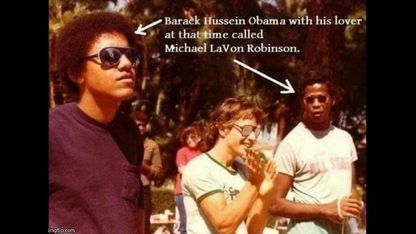
So when Bathhouse Barry says more than once, “my husband Michael” in public arenas, he has LESS THAN ZERO GROUNDS for a defamation lawsuit
Bet Larry Sinclair would have something interesting to say about this…were he still alive
Source: https://www.facebook.com/share/v/1BEwuYoZze/
Thumbnail: https://imgflip.com/i/38tqkj